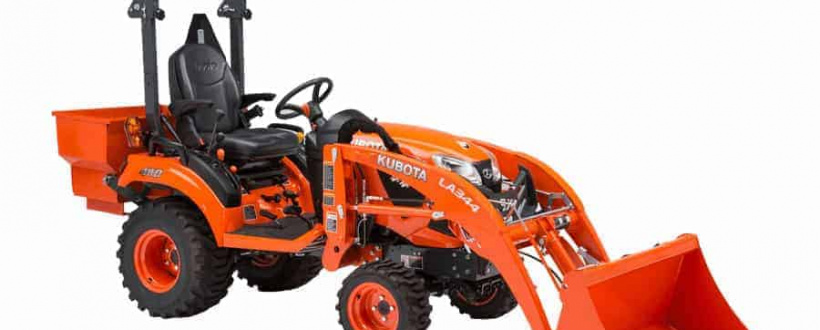
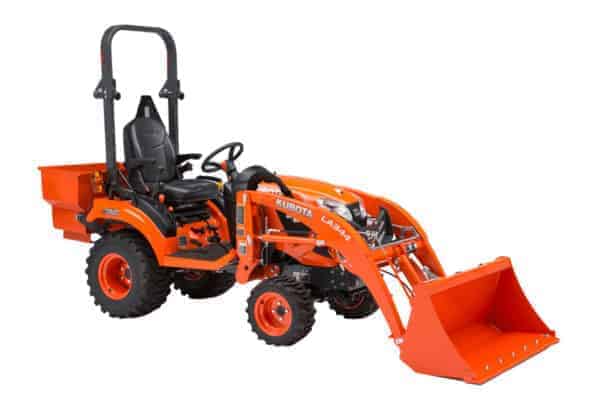
BX2680
XHP – 4WD
Key Point 1
Key Point 2
Key Point 3
From $27,999 inc GST
36 Months | 2% Deposit | 0% pa. interest
Key Point 1
Key Point 2
Key Point 3
36 Months | 2% Deposit | 0% pa. interest
Key Point 1
Key Point 2
Key Point 3
36 Months | 2% Deposit | 0% pa. interest
Key Point 1
Key Point 2
Key Point 3
36 Months | 2% Deposit | 0% pa. interest
Key Point 1
Key Point 2
Key Point 3
36 Months | 2% Deposit | 0% pa. interest
Construction is a very risky industry. Heavy machinery, powerful tools, working at heights and unstable terrain are just a sample of the unavoidable dangers that may be encountered on any site. There is no way to totally remove risk, but there are a number of things that can be done to reduce the likelihood of risks leading to injury or death.
Every work site is different, and as such, every worker should be introduced to the specific risks and requirements of any site they are expected to work on. This induction is site specific, but it should include a run through of non-specific safety requirements such as behaving respectfully and bringing attention to unsafe equipment or practices when they are noticed.
It is also an opportunity to check that each worker has the required qualifications and certificates to be operating tools or machinery. It is important that everyone understands that they are responsible both for their own safety and the safety of those around them.
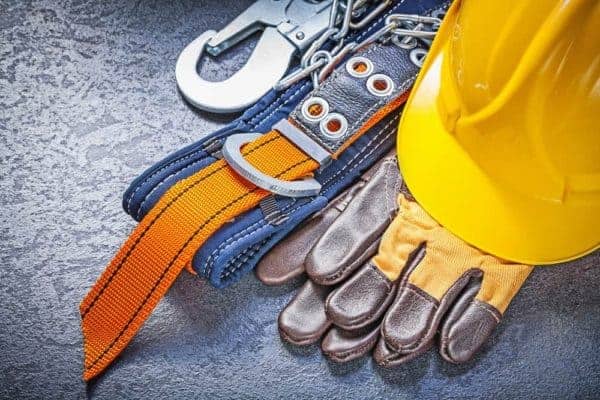
It almost goes without saying, but personal protective equipment is extremely important on construction sites. No matter how many Worksafe practices and policies are in place, machines like Kubota excavators, RTVs and stump grinders are heavy and dangerous, and accidents do happen. Steel capped boots, hearing protection, eye protection and helmets are standard personal protection devices that are often required on construction sites.
Working outside, in the sun, rain and wind, moving heavy objects and performing complex and strenuous tasks can take a serious toll on the mind and body. Fortunately, the 21st century has seen a rise in workplace safety and tolerance, and a big part of this is having the supplies, practices and equipment on hand to make work more pleasant for everyone. These items can include sunscreen, hand degreaser, moisturisers, communal water supplies, snacks, designated smoking areas, hygienic toilets and weather-related work cut-off limits. A healthy worker is a happy worker, and a happy worker is more productive and less likely to accidentally hurt themselves or others.
In the same spirit as personal care supplies and practices, a workplace that is inclusive of all workers and supports their needs is a safe workplace. This kind of attitude is invaluable in creating a safe workplace, as it makes managers more approachable when workers have concerns about the safety of equipment or working practices.
AllClass has a large range of new and second-hand construction equipment that can make your site safer and more efficient by reducing manual handling activities. Contact us on 1300 255 252 or contact us online to find out more about our product range and services.
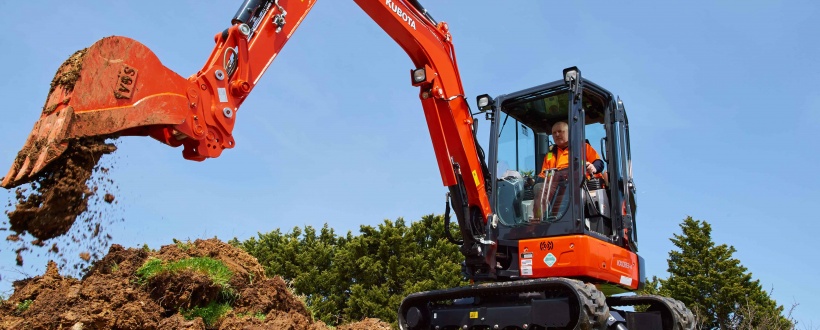
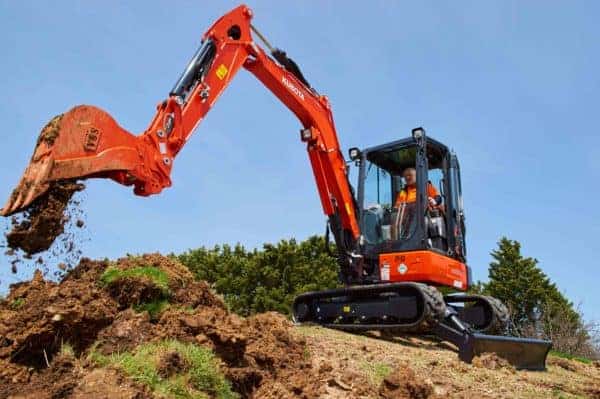
There’s nothing worse than having your site ready to go only to have your excavator break down. Chances are you have been planning to use the excavator for weeks and may have even hired specialist contractors to complete the job. Have no fear, there are several things you can do to minimize downtime in the event of breakdown.
Always be wary of hydraulic components of any machine if and when it is shut off in any position other than the specified power down position. If for example the bucket is seemingly frozen in mid-air, be aware that it will fall slowly as the day wears on.
If the excavator is parked on a slope or soft or uneven terrain, be aware that its substantial weight may cause it shift and move over time.
If you are going to attempt troubleshooting, be careful about where you put your hands, as components of the machine are likely to be extremely hot and the coolant will be pressurised. Do not open until it has cooled down sufficiently.
Before you call in an expert, there are a few simple checks you can perform yourself. For a longer guide on trouble shooting your excavator, read this blog or review the operating manual of your machine.
The coolant may need replacing, but wait until the machine has cooled down before attempting this operation. Alternatively, the radiator core may be clogged with dirt or debris, so try cleaning it out with a blower.
Check the fuel and air filters for obvious signs of poor flow. Try cleaning them to see if this fixes the problem.
One of the advantages of having excavators built by strong engineering companies, such as Kubota, is that they are built to last a long time. The reality is that, like all machines, excavators require routine maintenance and servicing. Find a local service team that can let your quality earth moving equipment age with dignity.
There is little value having your contractors standing around waiting for the excavator to start working. Call a professional repair person to come out on the double and fix your excavator on site. It might seem like an expensive choice but the alternative is even more expensive.
AlllClass Construction Equipment are expert technicians of new and used excavators in the Brisbane area. Our mechanics can visit you on site to repair a faulty excavator so that you can get back on with your job. If you own an excavator and are seeking someone to do a routine service, we can do that too. Call us on 1300 255 252 or contact us online to find out more about our product range and services.
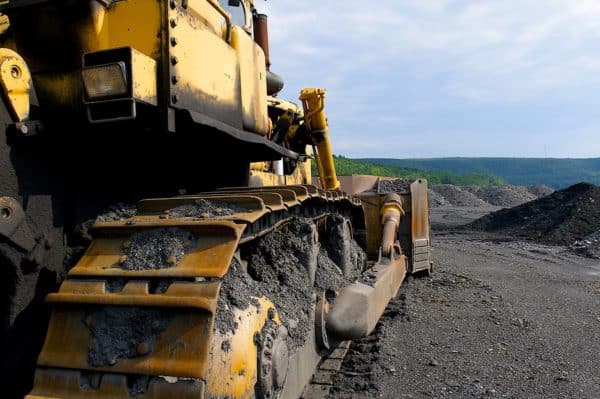
For thousands of years, humans did all of their excavation by hand. The agricultural revolution saw the advent of the plough, allowing working animals to carry the brunt of the work. More recently, the industrial revolution made it possible to mechanize work, resulting in tractors replacing working animals. In the mining and construction industries, digging by hand was still employed due to the cheap cost of labour, but machines were increasingly being brought in for the most demanding tasks. Today, modern excavators come with all kinds of technology to make them easy to use and remarkably efficient and productive. In this article, we will discuss some of these technological innovations and how they are changing the game.
It is no surprise to anyone who are familiar with excavators that they are powerful machines. That power comes from the engine, which becomes increasingly large as the power demands of the excavator increase. Diesel is the most common fuel for these engines, and its price has been rising steadily for years. Recently, the clever engineers at Kubota have developed auto-idling technology, automatically reducing the RPMs and fuel consumption of their excavators when the control levers are neutral for more than four seconds.
Artificial intelligence might seem like a strange phrase in the area of digging hole, but realistically, it is the biggest innovation in the industry for decades. It is the school of thought that’s developing driverless cars and medical robots, so the benefits to the construction industry will be incredible. While slow on the uptake, the momentum is sure to grow as prices fall and consumer appreciation grows. For some companies, artificial intelligence means developing autonomous equipment, while for others, it means collaborating with a human operator using laser-guided precision and predictive movements.
Unless you are working on the mines or major large-scale construction projects, a full-size excavator is probably too big for your needs. The world’s largest excavator is nearly one million kilograms, and for most sites, an excavator could barely hold such a machine. Mini-excavators like the Kubota K008-3 are the machines for domestic and light commercial applications. Because mini-excavators are so popular, there is a lot of research going into reducing their tail swing and improving their overall operating efficiency.
If you are after an excavator in Queensland, look no further than AllClass Construction Equipment. We are leading retailers of new and used mini-excavators, as well as a wide range of construction and power equipment. Talk to one of our professional consultants today for personalized service. Call 1300 255 252, or contact us online.
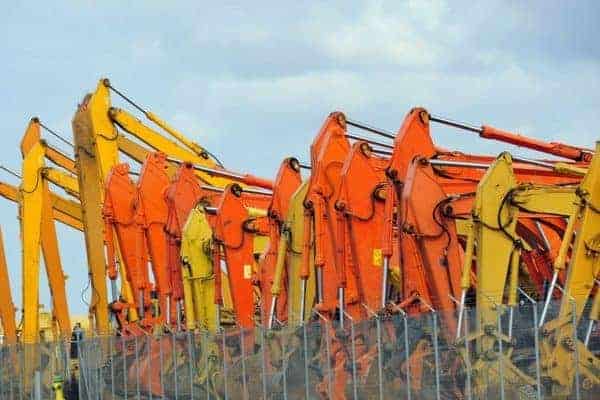
Kubota is one of the most well-known brands in heavy machinery, and with good reason. Kubota produces top quality products that serve a wide range of industries, from construction and mining to large-scale water processing and turf management. The company was founded in 1890 in Japan and over the last 120+ years has developed into a global brand. In this article, we will briefly discuss the history of Kubota, their current operations, and some of their best performing products.
The beginnings of Kubota started in 1890 in Osaka, where it was then known as the Oide foundry. Gonshiro Kubota started the company 1897 and changed its name to Kubota Iron Work, working in the production of pipes, fire-fighting equipment and taps. It wasn’t until 1922 that Kubota began producing engines, and not until 1953 that they entered the construction equipment industry. In 1962, Kubota began full-scale production of paddy field tractors for improving the efficiency of rice growing operations, and in 1963, production diversified further into vending machines. By this time, Kubota was a massive company, and by 1972 they had launched the Kubota Tractor Corporation in the US to become viable in the North American Market. In 2002, they produced more than 20 million engines, which gives a scope of their reach in the global machinery market.
Different Kubota products are manufactured in different places. They are a global brand with products being sold and used in more than 110 countries. No matter where they are operating, Kubota abides by the laws of individual countries and regions, as well as global agreements and rules. Kubota places a strong importance on maintaining environmental sustainability and has always been focused on producing products that are conducive to a safe and prosperous future.
Kubota produces some of the world’s best mini-excavators. These include compact multitasking machines and an extensive array of zero tail swing models that makes it easier to work in tight spaces. Because Kubota is dedicated to quality and consistent improvement, their excavators are persistently rated as some of the best on the market. Recent innovations like auto-idling technology and smarter hydraulic oil management systems have led to increases in efficiency, fuel consumption and productivity.
AllClass Construction Equipment are licensed distributors of Kubota equipment in Queensland. We specialise in new and used mini-excavators and offer a wide range of construction and power equipment. Talk to one of our professional consultants today for personalized service by calling 1300 255 252. Alternatively, contact us online.
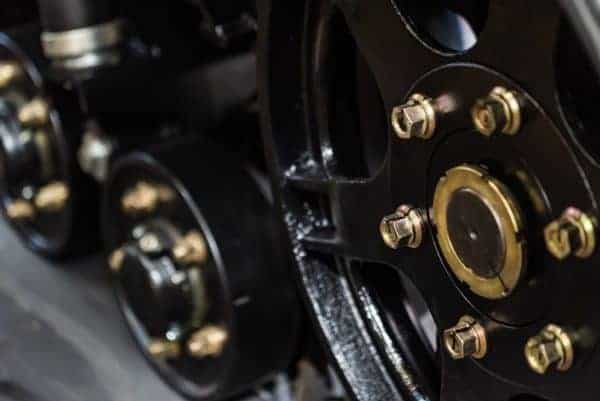
It’s easy to forget that just a few hundred years ago Australia once had no skyscrapers or train lines, much like the rest of the world. The last hundred years has seen an exponential increase in the size, productivity and efficiency of earth moving equipment. Construction equipment has literally changed the shape of the planet; building canals, digging up mountains and flooding valleys with dams. In this article, we will discuss how construction equipment has evolved over time.
Nobody is quite sure who invented the shovel, the pickaxe and the hoe, but these instruments surely revolutionised the way work was carried out. There is even some evidence to suggest that these devices were invented in different places, at different times, in different iterations. The functions they provided would have drastically increased the efficiency and productivity of agricultural tasks, leading to increased yields and the ability to support larger populations.
Historical records of Rome, and what is now called Europe, provides evidence of animal-integrated construction. Horses, donkeys and oxen were regularly employed to drag materials, assist in the construction of roads, and provide mechanical advantage to foundries and granaries.
The first versions of the bulldozer, dump truck and tractor were horse-drawn apparatuses. Engineers were quick to realise the power of the steam engine, and it wasn’t long before work animals were replaced. Steam power ran across the world, bringing with it the power of the train and quickly opened new areas to agricultural and mining. The advent of the internal combustion, and eventually the diesel engine, revolutionised construction equipment once again, as it was much cheaper than petrol and provided easily portable power to machines around the world.
As the power of engines and demands of industry grew, construction vehicles became bigger, capable of moving ever increasing loads. The rigid wheels of the late 19th and early 20th centuries were not well matched to handing the varied landscapes of the world, and frequently got bogged as a result. Caterpillar tracks hit the market through a series of innovations by different inventors around the world, and suddenly construction machines could go almost everywhere. Caterpillar tracks are still the popular choice for a lot of earth moving equipment, such as excavators.
AllClass Construction Equipment are distributors of hard working heavy machinery equipment in Queensland. We specialise in new and used Kubota mini-excavators and offer a wide range of construction and power equipment. We offer a personalized service, and you will deal with a real person who cares about your satisfaction. Talk to one of our professional consultants today by calling 1300 255 252. Alternatively, contact us online.
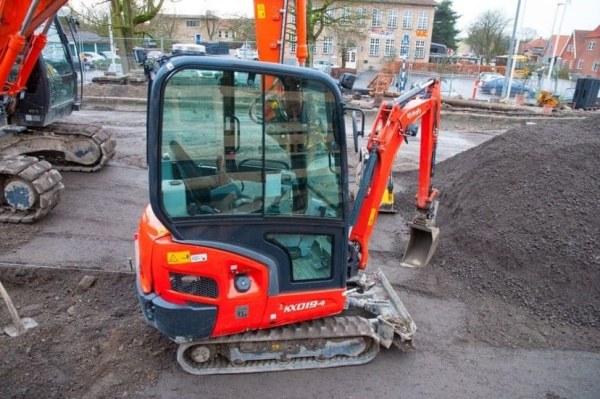
Even before the invention of the shovel, humans have always looked for ways to improve the efficiency of their work. With every new invention in the construction industry, it became possible for labourers to get more work done with less effort. Tractors revolutionised the agricultural industry by increasing the amount of land and work that could be handled by one person, enabling the global food system to feed billions of people. The mini excavator is the tractor of the construction industry, capable of performing dozens of tasks and drastically reducing the demand for unskilled labourers on site. In this article, we will expand on the wonders of this piece of machinery.
Mini-excavators are usually capable of being fitted with multiple attachments, often simultaneously as in the case of the Kubota K008-3, making them perfect for performing all kinds of jobs. Mini excavators are capable of swapping out the standard scoop for skidsteer buckets, forks, hydraulic rock grabbers, sieves and brush cutters, just to name a few. With blade attachments, mini-excavators can perform the work of bulldozers, levelling a site before utilising their hydraulic arm and the relevant attachments to begin excavations in earnest.
Large scale excavators are thirsty machines. Not only are they expensive to purchase and store, but their running costs are exorbitant due to the massive quantities of diesel they consume. Mini excavators, on the other hand, are much lighter and have the advantage of being refillable from the back of a pick-up truck. They can also be transported to and from building sites on normal sized trailers. Recent innovations in the industry have led to the development of auto-idling technology to reduce fuel consumption. Additionally, artificial intelligence underpinned by decades of data collection is making it possible to further refine the design and operation of these machines.
All of the benefits we have described so far are further multiplied by the capacity of certain kinds of excavators to work without any tail swing. The Kubota U Series is the pinnacle of this variety of excavators, with units such as the U35-4 able to perform the same work as other similarly sized units without having a tail that extends beyond the limits of its tracks. This is particularly important for working on highways and in tight spaces where this tail swing could cause serious problems.
AllClass Construction Equipment have more than 20 years of experience as professional distributors of heavy machinery, engines and power equipment in Queensland. We specialise in new and used Kubota mini-excavators and a full complement of attachments. Talk to one of our professional consultants today by calling 1300 255 252. Alternatively, contact us online.